
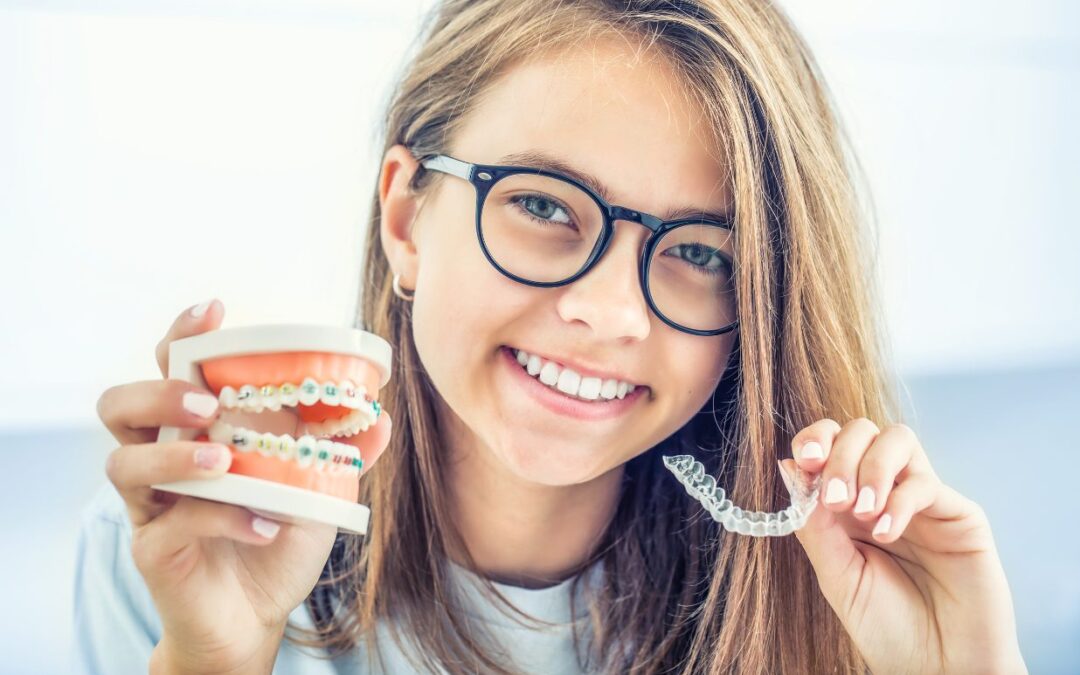
If your family is weighing braces against Invisalign® or another clear aligner, you are asking the right question, just possibly in the wrong order. The better first question is: what does this particular smile need? Once that is clear, the choice between brackets and aligners usually gets much easier. This guide walks through how the two options really compare and how we help families from Cherry Hill and Pennsauken decide.
How Each Option Moves Teeth
Both braces and clear aligners apply gentle, steady pressure that encourages teeth to move through the bone over time. The difference is how that pressure is delivered.
Braces use small brackets bonded to the teeth and a wire that the orthodontist adjusts. Because they are fixed in place, they work around the clock without anyone needing to remember them. At our office, Dr. K uses the Pitts braces system, and she is a member of the Pitts Masters Group of orthodontists.
Clear aligners are a series of thin, custom-made plastic trays. Each set shifts the teeth a small step before you switch to the next. Invisalign is the best-known brand, but it is not the only one. Dr. K treats aligner patients with Spark Clear Aligners, a premium clear aligner system.
Side-by-Side Comparison
| Factor | Braces | Clear aligners |
|---|---|---|
| Appearance | Visible brackets and wire | Nearly invisible trays |
| Removable? | No, always working | Yes, for eating, brushing and flossing |
| Daily responsibility | Careful cleaning around brackets; some food limits | Wearing trays most of the day and switching sets on schedule |
| Office visits | Regular in-office adjustments | Fewer visits possible with remote monitoring |
| Complex bite problems | Very versatile | Handles many cases; some need extra tools |
When Braces Tend to Be the Better Fit
- Younger patients who may not reliably wear removable trays all day.
- Complex movements, such as significant rotations or bite corrections that benefit from fixed control.
- Anyone who prefers not to manage trays. Braces simply do their job between visits.
When Clear Aligners Tend to Be the Better Fit
- Teens and adults who want discretion at school, work or in photos.
- Busy schedules. Our aligner patients receive ScanBox remote monitoring at no additional cost, so Dr. K can check progress virtually and many in-office visits can be skipped.
- Food lovers. Trays come out at meals, so there is no list of foods to avoid.
What About Cost?
Many people assume aligners always cost more. In practice, the fee for either option depends mostly on how complex the case is and how long treatment will take, so the two are often closer than expected. At your free consultation we review your insurance benefits and explain our in-house financing, interest-free payment plans and CareCredit. You can read more on our payment and financing page.
How Long Does Treatment Take?
For many patients, comprehensive treatment takes somewhere between one and two years with either approach, but every case is different. Mild crowding may finish sooner; jaw width or bite problems can take longer. Consistency matters with aligners: trays that sit in a backpack are not moving teeth.
Why the Smile Plan Comes Before the Appliance
Dr. K plans treatment around the whole face, including arch width, profile, smile line and lip support. Her approach is laid out in our 7 Elements of a Confident Smile. Sometimes that plan points clearly to braces; sometimes aligners are ideal; and occasionally a patient needs something more, like palatal expansion, before either one. The appliance is a tool for reaching the plan, not the plan itself.
Braces vs. Aligners: Quick Answers
Do you offer Invisalign?
For clear aligner treatment, Dr. K uses Spark Clear Aligners, a premium alternative to Invisalign that works the same basic way: a series of custom, nearly invisible trays. If you have been searching for Invisalign in Cherry Hill, a free consultation will show whether clear aligners suit your case.
Are braces or aligners more comfortable?
Both cause some pressure for a few days when treatment starts and with each new stage, which usually fades quickly. Aligners have smooth edges and no wires, so many people find them gentler on cheeks and lips. Braces may need a little orthodontic wax at first while the mouth adjusts.
Can my teen choose aligners?
Often, yes. Many teens do very well with aligners when they are motivated to wear them most of the day. Dr. K will look at both the bite and your teen’s habits and give an honest recommendation, including when braces would be the more reliable choice.
Which one gives better results?
In experienced hands, both can produce excellent results for the cases they suit. The quality of the plan matters more than the appliance. That is why Dr. K starts with a full exam, photos and a 3D x-ray before recommending either option.
Get a Personal Recommendation
The quickest way to settle braces versus aligners is a conversation with a specialist who has examined your teeth. Your first visit with Dr. K is free, takes about an hour, and ends with clear options and costs. Our Pennsauken office is just 8 minutes from the Cherry Hill Mall. Book your free consultation or call (856) 663-4881.